














An open-air concert in Singapore reimagines cultural exchange through Polish folk traditions and Asian musical heritage. Set within the Botanic Gardens, the evening unfolds as a layered dialogue shaped by improvisation, memory, and shared sound.
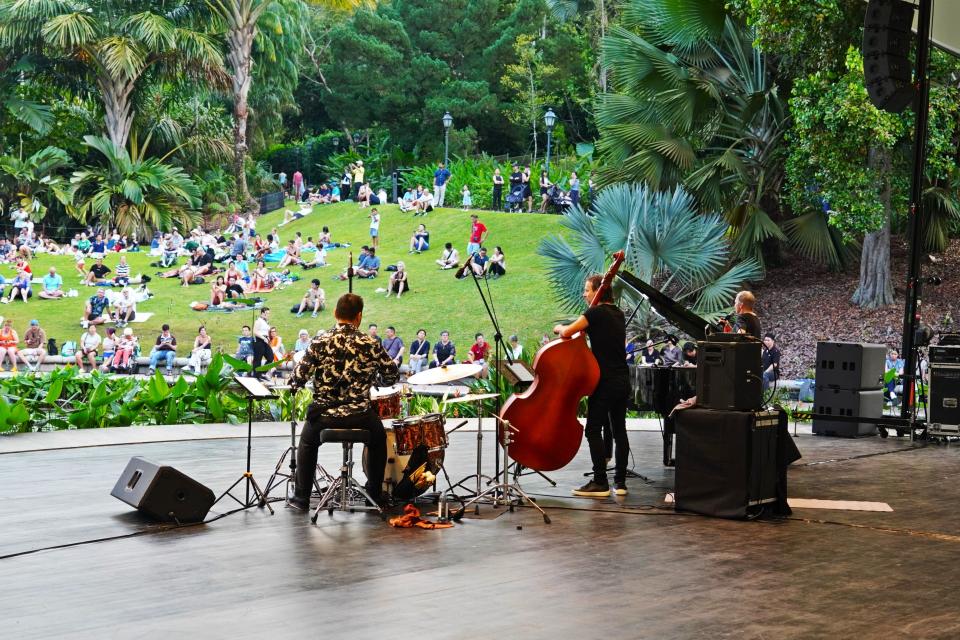
As twilight settles over the lawns of the Singapore Botanic Gardens on 16 May 2026, the Shaw Foundation Symphony Stage will become the setting for a conversation that stretches far beyond geography. “A Rojak of Sounds: Musical Flavours from Poland to Singapore” arrives not as a conventional concert, but as a meeting point between histories, traditions, and the instinctive language of live performance.
Presented as part of the 10th edition of the PolandSHIOK! Festival 2026, the open-air evening reflects the quiet complexity of Singapore itself. Here, cultures rarely exist in isolation. They overlap, adapt, and evolve in ways that feel lived rather than curated. That same spirit forms the heart of this intercultural collaboration led by acclaimed Polish multi-instrumentalist Prof. Maria Pomianowska, whose work has long explored the spaces where folk traditions meet contemporary interpretation.
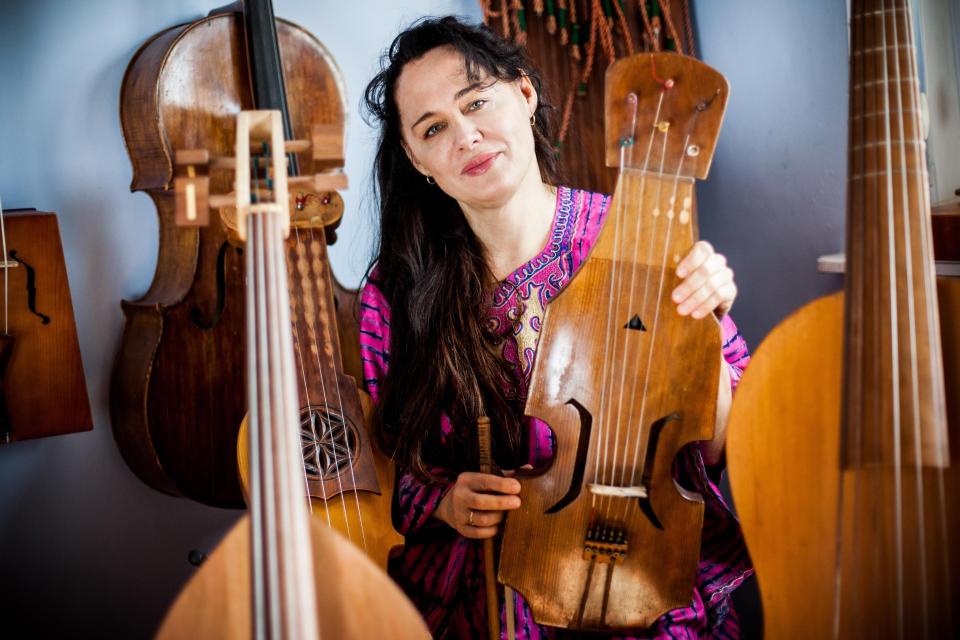
Pomianowska’s practice is rooted in restoration and reinvention. Through rare instruments such as the suka biłgorajska and fidel płocka, she revives fragments of Polish musical heritage while inviting them into dialogue with other traditions. In Singapore, that dialogue unfolds through a richly layered ensemble featuring Polish accordionist Piotr Kopietz alongside Singapore-based musicians representing Chinese, Malay, and Indian musical forms.
Rather than separating these traditions into neat performances, the evening leans into improvisation and shared listening. Pipa, guzheng, erhu, rebana, dizi, Indian flute, violin, and double bass move through the same musical landscape, allowing each sound to retain its own identity while responding to the others around it. The result promises less of a fusion spectacle and more of an unfolding exchange, intimate in spirit despite the scale of the setting.
The concert’s title feels particularly apt. In Singapore, rojak is more than a dish. It is shorthand for cultural layering, contradiction, and coexistence. That sensibility runs through the programme, where Polish folk influences encounter Asian instrumentation in ways that feel exploratory rather than performative. The atmosphere is expected to remain relaxed and accessible, shaped as much by the openness of the gardens as by the music itself.
The collaboration also extends beyond the stage. On 14 May 2026, Pomianowska and Kopietz will lead a masterclass at Singapore Raffles Music College titled “Folk Instruments and Rhythms of Frédéric Chopin’s Time.” Combining storytelling, live demonstrations, and participatory rhythm exercises, the session offers students and the public an opportunity to engage directly with the musical traditions that influenced Chopin’s compositions. In keeping with the broader ethos of the festival, the experience centres not only on preservation but also on exchange.
At a time when cultural programming often prioritises spectacle, “A Rojak of Sounds” takes a more thoughtful path. It proposes that heritage is not fixed, and that traditions remain most alive when shared openly between communities willing to listen to one another.