















Somewhere else, as much as we love Singapore. This time, it was home. In three different bottles. Expat Choice reporter Joanne Flinn reconnects with Lark whisky at QT for their new releases. Designed for the international tastes and palette.
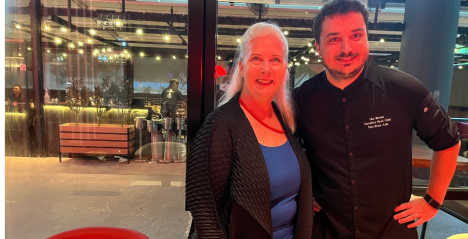
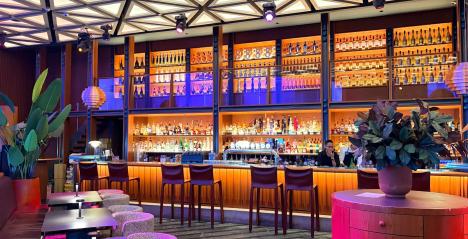
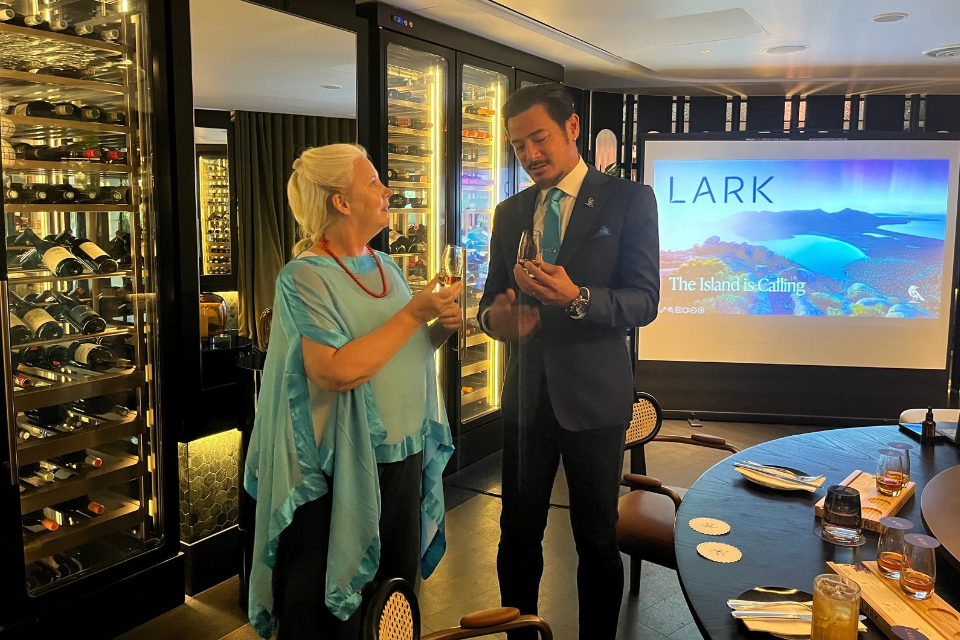
Lark is a first-class, award-winning whisky from Tasmania. I say first-class with confidence because I've tasted it at both ends of it's journey. Sitting outside the distillery in Hobart, looking out over the water in the early evening twilight with crisp air and blue sky, catching up with an old university friend. And now here in Singapore, at a tasting in the beautiful QT, where gorgeous lighting, velvet curtains, velvet chairs, and a palette that is somehow both subdued and colourful created exactly the right mood for what was to come.
The whisky pioneer in Australia, Bill and Lyn Lark effectively built the industry. Amazingly, they did this despite the fact that distillation had been prohibited in Tasmania since 1838. Apparently the convicts were enjoying themselves a little too much. So when Bill started on his whisky trail, first he had to deal with a law that was a hundred and fifty years old before he could even begin producing. They reached out to John Grant, who brought the making know-how from Scotland. And then Tasmania did what Tasmania now does. Great whisky.
The first we tried, No. 151 — Fire Trail. The box is a deep teal. Of the new range, this is closest to the traditional style. A spice and fruit palette with umami and a flow of silk across it. Some at the tasting were picking up chocolate ganache and stewed mulberries. The vocabulary people have for whisky tasting is wonderful.
The temperature swings that naturally occur on the island creates what amounts to a gentle massage of the cask. The cask breathes. So whisky flavours and matures faster than its northern hemisphere counterparts. The casks themselves are unbroken American oak, previously used for port and sherry, many from Seppeltsfield, the long-established Australian port and sherry makers. Some, seventy years old with a tight grain, adding flavour without too much colour. Others, a hundred years and more, with a twisted grain bring colour. It’s something to be drinking something that has matured in a vessel of that age. Through each of them runs Tasmanian peat and Apple Island apple-smoked water, using local apple wood.
The second, No. 183 — Devil Storm. Named for Devil's Cape on Tasmania's coast. The deep midnight blue of the box comes from the bioluminescence you can see there. This is more intense, sweeter, with a softer spice palette. On the nose, plums and stewed honey with a touch of cacao. The chocolate comes through more fully on the taste, alongside blueberries. Some were finding burnt maple and sticky toffee on the finish. Despite its name, this is one to curl up with on a quiet evening with a good friend and solve the problems of the world.
The original Lark bottles were oval-edged, styled after a hip flask. Elegant and weighty. The new bottles are taller, stylised after the wings of a lark. Bill and Lyn are leaning right into the metaphor of their name. The new range is blended to meet modern tastes, including the palates we prefer here in Asia, which are different from the traditional Scottish profile. Each bottle comes in a box painted by a specific artist, working in a single colour. Each one its own adventure.
And third. No. 285 — Ruby Abyss. Named for the vivid red lichen off the Tasmanian coast. This is the dessert Lark. Cheese courses, too. Umami and fruit dominate. The sweetness and silkiness are high on the palate, while the smoke and spice are beautifully relaxed. On the nose, pears in dessert wine with a touch of salt macadamia. On the palate, people were describing butter croissant layers with plum folded through chocolate. If this is not making you hungry, I don't know what will. The finish is a long, golden treacle.
Place is big in Tasmanian products. It’s the climate. It is different. It is clean air, fresh water, an island at the edge of the world with Antarctica as the next stop. As a consequence, these whiskies taste quite unlike anything from Scotland or Japan. And the whole Lark approach has been built off taste rather than tradition, experimentation rather than rules.
Which is exactly how you should be enjoying your Lark.