














The menu at La Casita in Surfers Paradise doesn't try to fit a huge, complicated continent into a single, easy-to-recognise "Latin flavour." Instead, it's a very accurate picture of food. The marks and folds on its surface show that it was used to make decisions and plan events. But the ink on it speaks of borders, heritage, and clear-cut differences.
The gifts are put into groups that show a lot of respect for where they came from. Arepas made from corn that are stuffed with chicken, beef or cheese are typical of Colombia, as are slow-cooked main dishes like Ropa Vieja.
Venezuela brings meals with complex structures and lots of food, led by the Reina Pepiada, Pabellón, and the strong Pepito. Chile, on the other hand, has its own unique pastry styles, like the traditional empanadas, the Completo, and the Barros Luco, which have rich flavours.
The Person Who Built the Arepa
Juanita Marin is behind this folded piece of paper. The written words can explain Ropa Vieja and tell you what a Pabellón is, but they can't show you how the kitchen really works. The real skill in cooking lies in food that looks deceptively simple.
Think about the unspoken discipline you need to become proficient and skilled at these basics:
The Dough: How to tell exactly how thick and wet an arepa is just by touching it.
The Pastry: Making sure that the shell of an empanada gives way and cracks instead of falling apart heavily.
The Balance: Knowing how much sour pebble to add so it cuts through the creaminess without burying the meat.
What Holds You Back: Knowing when to stop adding ingredients.
It's very difficult to forgive simple food. There is no place for mediocre technique to hide behind a fake 'explosion of flavour'.
Beyond the Campaign for Tourism
In an area known for public transport, tall buildings, and tourists, La Casita in Surfers Paradise is an entirely unique place to go. It swaps out the airport for a dining room and the staged cultural performance for a cosy, real kitchen.
For those who haven't tried one before, it's a chance to find out what a Pepito is all about. For people who miss their home country, a sip of Inca Kola or Pony Malta is like a transportive, geographical collapse.
These reports began with observation.
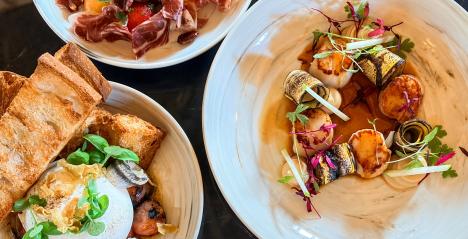
A menu that had been handled. Opened, closed, folded back and considered. Photographs of golden pastry, arepas split wide enough to hold their fillings, beef that appeared to have been given the time it needed, little bowls of sauce waiting off to the side, and drinks whose labels may mean almost nothing to a newcomer but can carry somebody else straight back home.
They also began with appetite.
It's not one of those manufactured tasting performances where every mouthful apparently changes a life. I mean the far more honest moment when you look at a dish and begin imagining what might happen when it reaches the table. Will the pastry crack? Will the corn smell warm and slightly toasted? Will the meat pull apart or hold its shape? What is in that sauce, and why do I already suspect I will want more of it?
Those tantalising taste bud possibilities are what drew my attention to the details of a La Casita in Surfers Paradise.
One small menu kept revealing much larger possibilities. What follows is not an attempt to speak for an entire continent. That would be ridiculous. Latin America is too vast, too culturally layered and too regionally distinct to be bundled into one convenient serving of “Latin flavour”.
There is something immediately likeable about a place called La Casita. The little house.
It does not arrive with trumpets. It does not sound grand or overly manufactured. It sounds close, personal and familiar. Somewhere food passes from one hand to another, and the person receiving it understands that lunch may have started long before the plate reached the table.
That was my initial reaction to La Casita in Surfers Paradise.
The menu itself has lived somewhat. There are creases, patches of reflected light and those small marks left by being opened, closed and passed around. Good. Menus are not supposed to exist under glass like museum pieces. They belong near elbows, fingerprints, spilt conversations, indecision and hunger.
I found myself looking beyond the larger photographs and into the details.
Across the menu are three clear headings: Colombian Tradition, Venezuelan Food and Chilean Food. That matters.
La Casita has resisted the temptation to throw everything into one oversized bowl labelled 'Latin food.' Colombia is allowed to be itself. Venezuela arrives with its dishes and names. Chile holds its ground. The distinctions remain visible even when the food itself has histories that travel across borders.
The arepa is an obvious example. Its relationship with maize reaches further back than the modern boundary separating Colombia and Venezuela. Empanadas appear beneath both Colombia and Chile, yet the photographed versions do not look interchangeable. Ropa Vieja appears beneath the Colombian heading, although the dish and its name have travelled through several countries and kitchens before arriving inside a bread roll on the Gold Coast.
The Gold Coast is where a compact menu starts becoming far more compelling than it first appears. It begins behaving like a map.
Under Colombian tradition, La Casita lists arepas with chicken, beef, cheese and mozzarella, along with a Colombian empanada and Ropa Vieja served in bread.
The Venezuelan selection introduces Reina Pepiada and Pabellón. Pepito takes up some of the menu’s most valuable photographic space, and frankly, it looks as though it needs both hands and a sensible plan before anybody attempts to eat it. Chile answers with the Completo, a Chilean empanada, and Barros Luco.
Already, we have pastry, bread, corn, cheese, avocado, chicken and beef moving through different national traditions. Some dishes share familiar ingredients but assemble them in very different ways. That is where the vague term “Latin flavour” really fails to capture the reality. There is no single flavour here. There are choices, histories and techniques.
Then there are the smaller details people often pass over. Avocado. Pebre. House sauce. Tomato sauce. Colombian a. Pony Malta. Uva Postobón. Inca Kola. Small lines on a menu. Big signals.
For somebody encountering them for the first time, these drinks may simply be curiosities sitting in a refrigerator. The colour stands out. The name is unfamiliar. The decision may hinge on curiosity. For somebody who grew up with one of them, the experience may be entirely different.
A label can carry a school afternoon, a family lunch, a corner shop or the sound of a kitchen thousands of kilometres away. Food and drink have an almost outrageous ability to collapse distance. One smell or sip, and suddenly geography loses its grip.
That emotional connection cannot be assumed, of course. Juanita’s story must still come from her, and her customers’ memories are theirs. But the possibility is sitting right there on the menu. That is part of what makes La Casita so compelling.
Its Surfers Paradise setting places it inside one of Australia’s most recognisable visitor districts. There are towers, traffic, holiday apartments, nightlife and the Pacific forever moving in the background. People arrive from everywhere, stay briefly and move on.
La Casita offers a different kind of travel.
No airport. No luggage. No carefully packaged cultural performance. Just names on a menu leading towards Colombia, Venezuela and Chile, and perhaps towards family kitchens that will never appear in a tourism campaign.
Some diners will walk through the door already knowing exactly what Reina Pepiada means. They may have a firmly held view about how an arepa should be prepared, filled and eaten. Their standards may be exacting because food carried from childhood usually comes with rules, even when nobody writes them down. Others will simply point at a photograph and ask, “What is that?”
Both diners matter.
Recognition sits on one side of the table. Discovery sits on the other. La Casita has to speak to both without turning the food into a lecture or sanding away its identity. The wording on the menu helps.
The cultural name remains, followed where necessary by a practical explanation. Ropa Vieja is still called Ropa Vieja. The words “served in a bread roll” merely tell an English-speaking diner what form to expect.
That is how translation should work. Open the door without redecorating the entire room. And then there is the person behind it all: Juanita Marin.
The menu can tell us what she chose to name, group, photograph and offer when that version was printed. It can show us which dishes were given space and which descriptions were considered necessary.
It cannot tell us who taught Juanita to cook.
It cannot tell us which kitchen sounds have remained with her or which aroma takes her backwards fastest. It cannot tell us what was served when money was short, what appeared when there was something to celebrate or which method she refuses to compromise simply because doing it properly takes longer.
The menu cannot explain how the dough should feel in the hand. It cannot tell us how Juanita judges the filling, when the heat is right, or how she knows something is ready without stopping to think.