















There is something about arriving in Ubud that quietly resets the rhythm of your thinking. It is not loud in its beauty. It doesn’t demand your attention. Instead, it reveals itself slowly—through the sway of palm trees, the soft echo of temple bells, and the endless green of rice terraces that seem to breathe alongside you.
Travel, when it is done properly, is not about perfection. It is about perspective. And nowhere is this more evident than in Bali, where the contrast between expectation and reality can feel like a delicate dance.
Choosing accommodation here can sometimes feel like a game of chance. On paper, everything may appear aligned—location, size, facilities—but it is only upon arrival that the true character of a place begins to unfold.
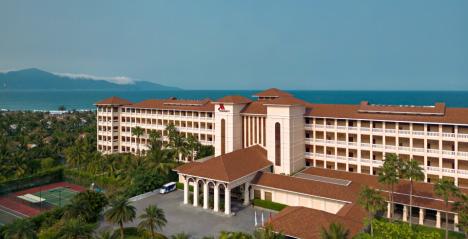
The property I experienced sits just beyond the pulse of central Ubud, tucked behind rice paddies that stretch like a painted canvas. From a distance, it promises tranquillity—and in many ways, it delivers. The rooms are expansive, almost unexpectedly so.
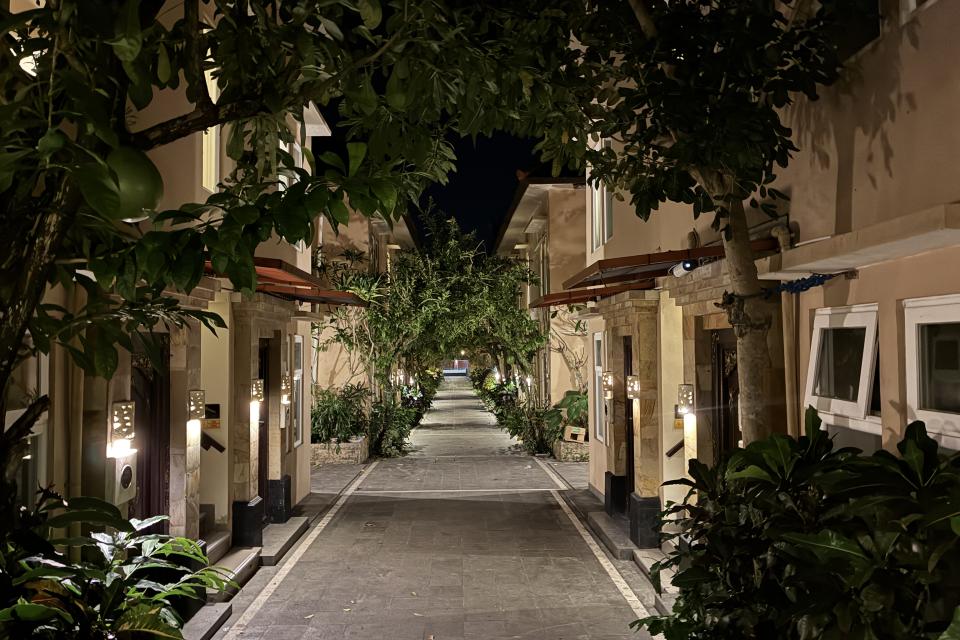
There is space to breathe, to think, to recalibrate. For the digital nomad or the reflective traveller, it offers a kind of quiet utility—an environment that invites you to sit with your thoughts, plan your next move, or simply exist without urgency. The pool, though showing signs of wear, still serves its purpose.
After a long walk through nearby rice fields, it becomes less about aesthetics and more about relief—a place to cool off and reset. Yet, it is not the physical structure of a place that defines Bali. It is its soul. And this is where the experience begins to shift.
The staff, while present and functional, seemed disconnected from the very essence that has made Bali a global sanctuary for travellers. The gestures were there—but the meaning behind them felt diluted. Smiles that should have been warm felt rehearsed.
Acknowledgements felt procedural rather than personal. In an island where hospitality has long been rooted in genuine human connection, this absence is not subtle—it is deeply felt. It raises a broader question: has Bali lost its gracious soul? The answer, thankfully, is no. What we are witnessing is an imbalance—an island in transition. Bali is evolving, restructuring itself under the weight of global demand, and not every property has kept pace with the cultural integrity that once defined it.
But step outside, walk a little further, engage with a local shopkeeper, or share a quiet moment at a roadside warung, and you will find it again—that unmistakable warmth, that gentle nod, that moment of eye contact that says everything without a word.
This property, then, becomes a reflection of that imbalance. Not a failure—but a missed opportunity. Because the fundamentals are all there. What it lacks is leadership.
True leadership in hospitality is not about management—it is about presence. It is about instilling pride, discipline, and awareness in every individual who represents the space. It is about reminding staff that what they offer is not just service, but an experience that travellers carry with them long after they leave.
A simple glance, a genuine smile, a moment of acknowledgment—these are the details that define a destination like Bali. Without them, even the most spacious room feels incomplete.
And yet, there is still value here. For those arriving in Ubud without a fixed plan, this property serves well as a temporary base—a place to land, regroup, and explore before committing to something more aligned with personal expectations. It is close enough to the centre to remain connected, yet far enough removed to offer a sense of calm.
A short ride—often no more than a dollar via the essential Grab—will take you into the heart of Ubud, where the energy shifts dramatically. Because Ubud itself is where the magic truly unfolds. Wander through the Sacred Monkey Forest Sanctuary and you are reminded that nature and humanity coexist here in ways that feel almost ancient.
Walk along the Campuhan Ridge Walk Ubud at sunrise, and the world feels still, untouched, and entirely yours. Venture slightly further to the Tegallalang Rice Terraces and you begin to understand why Bali has long been considered a place of spiritual and visual abundance.
There are mornings that begin with yoga overlooking the jungle, afternoons spent discovering artisan markets and galleries, and evenings where dining becomes an experience rather than a necessity—whether in a tucked-away café or a refined restaurant overlooking the valley.
And then there are the quieter moments—the ones that define Bali more than anything else. Sitting roadside with a coffee. Watching offerings being placed with quiet reverence. Hearing distant gamelan music drift through the air as the sun begins to fall. These are the moments that remind you why you came. Back at the property, breakfast offers a surprising sense of comfort.
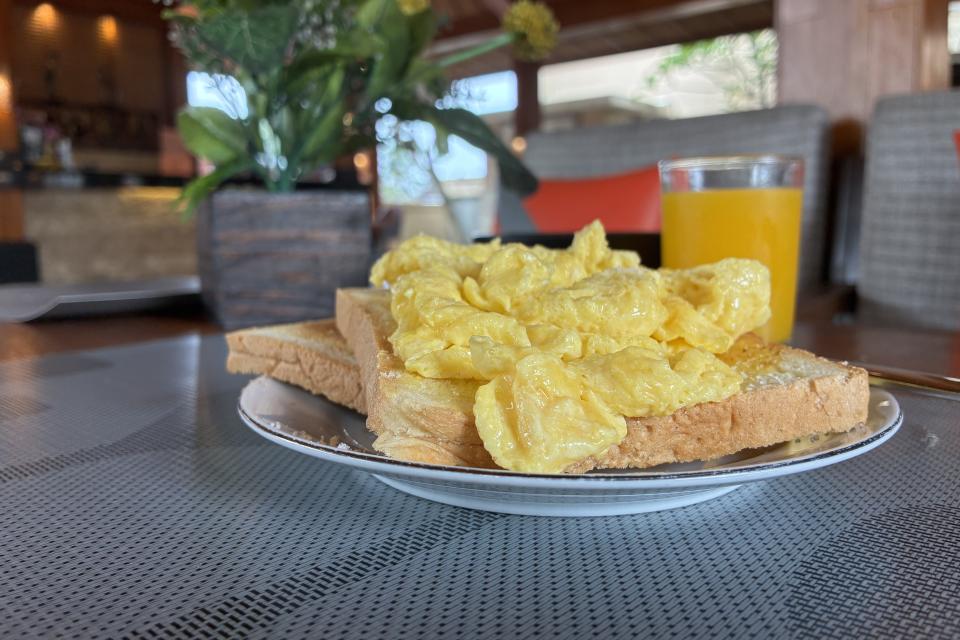
Served between six and ten each morning, it is simple but well-executed. The scrambled eggs arrive light and airy, the kind that would not feel out of place in a European kitchen.
The coffee, understated but aromatic, carries a subtle familiarity—almost as if you’ve stepped briefly into a quiet Italian laneway. Cereals, toast, and small comforts round out the experience, grounding you in something recognisable amidst the unfamiliar.
It is, in many ways, a metaphor for the stay itself. There is substance here. There is potential. There are moments that land well. But it is not yet complete. If one were to place a measure on it, the accommodation stands confidently—generous, functional, and inviting.
The staff, while present, require guidance to rediscover the essence of Balinese hospitality. And management—this is where the transformation must begin.
Because with care, attention, and leadership, this property could shift from adequate to exceptional. Bali has not lost its soul. It is simply waiting to be honoured again—property by property, moment by moment, interaction by interaction. And for the traveller willing to look beyond the surface, it is still very much alive.