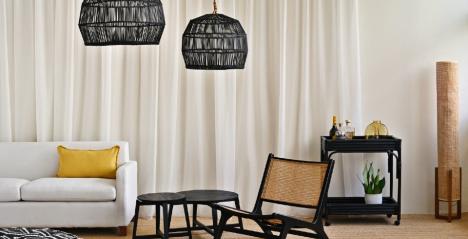
In Australia, both children and adults most often receive a variety of domestic injuries. Their source can also be an apartment or a house.
In this article, we will tell you how to avoid health problems within the walls of your own home and how to make it a safer place for your family.
Choose safe materials
The use of quality materials at the stage of major or cosmetic repairs is one of the main pledges of safety.
In the process of painting, levelling walls, varnishes, paints, solvents and other materials are used for the preparation and decorative finishing of surfaces. They often contain substances harmful to human health. For example, carcinogenic phenols and formaldehyde can provoke allergies, poisoning, and even cancer.
Modern finishing materials can be dangerous even after the completion of the repair: if the foamed polyurethane for insulating buildings did not have time to completely dry during the installation process, then it will emit fumes of phenols and formaldehyde.
High-quality paints, enamels, primers and other finishing materials are more expensive, but they practically do not pose any harm to health either at the time of use or after completion of work. This is exactly the case when you should not skimp on quality.
It is worth paying attention to ready-made interior solutions. For example, the use of various plasticizers in the composition of a stretch ceiling canvas can be harmful to health.
Make sure the manufacturer has safety certifications for the products. This rule applies to any materials used - it is better to spend money on repairs than on restoring health.
Think about the colour scheme
There are quite a lot of scientific studies that link human mood to interior colours, but their results often contradict each other. Scientists argue that this topic has not been sufficiently studied in modern science.
One way or another, but the surrounding colours do affect our emotional state - for example, they can whet the appetite (red and black) or help focus (shades of blue).
When choosing a colour, do not neglect your attitude to it - this is a decisive factor that will determine whether you will enjoy being in the room.
Take care of fire safety
Improper use of electrical appliances is the main cause of fires in houses and apartments. To reduce the likelihood of fire, it is necessary to prevent the causes of a short circuit at the repair stage.
Wrong choice of wire diameter
The cross-section of the copper wire of the lighting circuit must be at least 1.5 mm², and for the circuit of sockets - at least 2.5 mm². For high-power appliances (for example, washing machines, dishwashers and electric stoves), a copper wire with a cross-section of at least 6 mm² is required
Improper installation and operation of sockets and switches
Choose products with spring terminals rather than screw terminals. Check the condition of the sockets every two to three years, do not connect devices with a power of more than 3.5-5 kW to sockets rated for a current of not more than 16 A.
Lack of remedies
It is imperative to integrate a circuit breaker into the wiring, which opens the circuit if the current reaches dangerous values, or a differential current switch (RCC), which will protect residents from electric shock and serve as protection against fires.
What is responsible for fire safety in the house:
Optical smoke detectors
Heat detectors
Manual call points and other devices
In many new buildings, they are provided, but if you are doing repairs in the secondary housing, or do not trust the common house systems, install them yourself.
Check ventilation
A stable air temperature, a humidity level of 45% and the absence of foreign odours are the merit of the normal operation of ventilation. For example, healthy sleep and the state of immunity depend on these indicators.
Recognising ventilation problems is easy: try holding a lighted match up to the ventilation hole. If the flame does not deflect towards the opening, ventilation does not work properly.
Ventilation repair is a laborious process, but some problems can be solved with the help of household appliances: a humidifier, an air purifier, an air conditioner or an autonomous room ventilation system.
Cleaning
Wash and disinfect frequently used surfaces and objects daily: kitchen table and countertop, writing table, faucet handles, kitchen cabinets, refrigerator handles, door and window handles, switches and buttons, remote controls, computer keyboards, and so on.
Surfaces that you do not touch so often (dressers, bedside tables, shelves, window sills) can be wiped and disinfected less often - two or three times a week.
If a person comes to you who does not live with you all the time, after he leaves, wipe and disinfect everything he touched. The same applies to the situation if someone in your family is sick. You can also call the professionals. Especially if you are moving into a new house or need end of lease cleaning. Simply Spotless Cleaning will make sure that everything is sparkly clean.
What can be used as a home antiseptic
Store sanitisers. Such as products for cleaning floors and plumbing, sprays and hand gels. You can buy them delivered to your home.
Medical antiseptics. That is, those that are used to wipe floors, tools and surfaces in medical institutions.
Bleaches. Any chlorine-containing products. But be careful: read the instructions and do not use a concentrated substance, otherwise objects and surfaces can be damaged. For processing, the bleach must first be diluted in a ratio of about 50-60 millilitres of the product per 1 litter of water.
Homemade sanitisers. Here are some instructions for making them.
Alcohol with a strength of at least 70 percent. Vodka and other alcohol will not work for disinfection.
Surround yourself with plants
The desire to green up the apartment is dictated by life in a big city. In the "stone jungle" with flora, it is often tense, and a plant in the house is both beautiful and good for health.
The main thing is to make sure that the plant is not poisonous (this is especially important if there are small children or pets in the house). Croton and other representatives of the Euphorbia family, dieffenbachia, passionflower, ivy, cyclamen, anthurium, and clivia are plants that you should avoid in this case.
Conclusion
Home should be the safest and most pleasant place. Make sure that you do everything to achieve that. We hope that with our recommendations you and your family members will be safe at your home.