

















A refined Hangzhou dining concept arrives in Singapore, bringing with it a slower, more deliberate culinary rhythm. At Nai Nai Flavor, balance, technique, and time redefine what Chinese dining can feel like today.
In a city where Chinese dining often leans toward pace and precision at scale, something quieter has arrived. At Nai Nai Flavor, the rhythm shifts. The experience is less about immediacy and more about patience, a subtle recalibration that begins long before the first dish reaches the table.
The concept traces its roots to Hangzhou, long regarded as the cultural centre of the Jiangnan region. Here, cooking is guided by restraint rather than intensity, with an emphasis on balance, clarity, and the natural expression of ingredients. This culinary philosophy, known as Hang Bang cuisine, rarely travels far from its origin. Its reliance on time, technique, and daily preparation makes it difficult to replicate outside its home kitchens.
Yet at i12 Katong, that philosophy has been carried over with surprising fidelity. Dough is prepared fresh each day, fillings are assembled in-house, and dishes come together step by step rather than through pre-prepared shortcuts. It is a method that resists modern efficiency, favouring control over convenience.
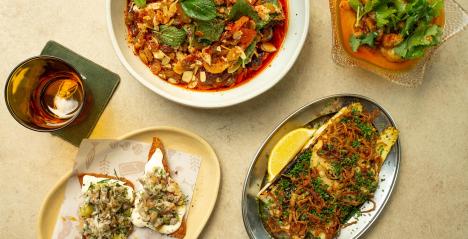
The difference reveals itself in small, deliberate ways. A pan-fried bun arrives with a base that holds a gentle crisp, giving way to a soft, airy top. Inside, a tofu filling carries a quiet heat, layered rather than overpowering. It is a familiar format reinterpreted with subtlety, where texture becomes as important as flavour.
Elsewhere, a claypot of slow-cooked chicken and pork broth offers a deeper expression of the kitchen’s intent. Simmered over hours, the soup develops its richness naturally, drawing body from the ingredients themselves rather than relying on seasoning. It is a reminder that time, when allowed to do its work, can be the most defining ingredient of all.
Even the more understated dishes carry a sense of history. A Youbu-style egg cake, prepared using a centuries-old technique, sits somewhere between a pancake and a flatbread. The egg is worked directly into the dough as it cooks, creating a layered texture that feels both rustic and refined. It is the kind of preparation that resists simplification, requiring attention at every stage.
Soup dumplings, too, take on a different character here. Originating from Shaoxing, they arrive softer, more delicate, with a broth that forms naturally during steaming. A light finish of shredded egg and fermented bean curd sauce adds depth without excess, staying true to the region’s preference for balance over boldness.
The meal often unfolds in a way that feels almost instinctive. Dishes are shared, revisited, and layered against one another. A bite of something crisp is followed by something in broth, then something lighter to reset the palate. No single plate dominates. Instead, it is the interplay between them that defines the experience.
This style of dining, common in Hangzhou, feels quietly distinctive in Singapore. It invites a slower engagement, encouraging diners to notice the details that might otherwise be overlooked. The way a broth lingers, the contrast between textures, the subtle shifts in flavour across the table.
In the end, it is not about spectacle or reinvention. It is about preservation, about bringing a way of cooking that has remained largely unchanged into a new setting without losing its essence. For those willing to look beyond the familiar, it offers something increasingly rare. A meal shaped not by speed or scale, but by time, care, and a deep respect for tradition.
a. 02-13/14 &, E Coast Rd, #02-26/27, Singapore